
If you own or manage a multi-family residential building in California, SB 721 inspection requires you to have your elevated exterior decks, balconies, and walkways inspected on a regular schedule. The law applies specifically to apartment buildings with three or more units and carries real deadlines and penalties for non-compliance.
What Is SB 721 and Why Does It Exist?
SB 721, also called the Balcony Inspection Bill, was signed into California law in 2018 following a fatal balcony collapse in Berkeley that killed six people and injured seven others. The legislature passed the bill to create a mandatory inspection framework for elevated exterior elements on multi-family residential properties.
Before SB 721, there was no statewide requirement for property owners to proactively inspect balconies, decks, or walkways unless a problem was already visible. The law changed that by requiring periodic inspections by licensed professionals, documentation of findings, and timely repairs when deficiencies are found.
The goal is straightforward: catch deteriorating structural and waterproofing conditions before they become dangerous. A deck can look perfectly fine on the surface while the framing underneath is rotting from years of water intrusion. SB 721 was designed to close that gap.
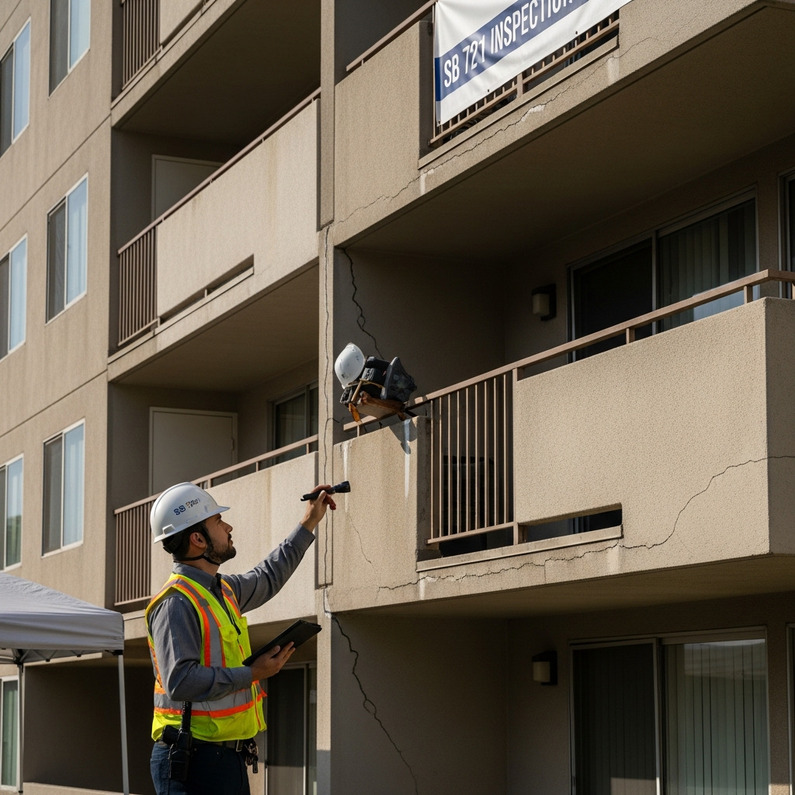
What Buildings Require SB 721 Inspection?
The law applies to multifamily residential buildings with three or more units. This covers the vast majority of apartment complexes, small multi-unit rental properties, and similar residential buildings throughout California.
If your building fits that description and has any of the following elevated exterior elements, those elements are subject to inspection under SB 721:
- Balconies
- Decks
- Porches
- Stairways
- Walkways
- Entry structures
The key qualifier is that these elements must be elevated six feet or more above ground and must be designed for human occupancy or use. An elevated mechanical platform or rooftop equipment area that people don’t regularly use would not typically fall under the inspection requirement.
For a deeper look at the inspection process itself, visit our page on SB 721 Balcony Inspections for Apartment Buildings to understand what the inspection covers and what to expect.
What Buildings Are NOT Covered by SB 721?
Not every multi-unit property in California falls under SB 721. The following property types are either excluded or governed by a different law entirely.
Single-Family Homes and Duplexes
SB 721 does not apply to single-family homes or duplexes. If you own a two-unit property, you’re below the three-unit threshold and are not subject to the mandatory inspection schedule under this law.
Common Interest Developments (HOAs and Condos)
Condominiums, townhomes, and other common interest developments governed by a homeowners association are covered under a separate but related law: SB 326. That law applies to HOA-governed properties and has its own inspection requirements, deadlines, and licensed inspector standards. If your building is an HOA or condo complex, SB 326 is the law to follow, not SB 721.
Commercial Properties
SB 721 is a residential statute. Commercial buildings, mixed-use properties where the primary use is commercial, and non-residential structures are not subject to its requirements. That said, local codes and other state regulations may still require periodic inspections for elevated elements on commercial properties.
SB 721 vs. SB 326: Which Law Applies to Your Property?
Many property owners confuse SB 721 and SB 326 because both laws deal with deck and balcony inspections. Here’s a side-by-side comparison to help you figure out which one applies to your building.
| SB 721 | SB 326 | |
|---|---|---|
| Property Type | Apartment buildings (3+ units) | HOAs, condos, common interest developments |
| Ownership Structure | Rental / investor-owned | Common interest / HOA-governed |
| Who Can Inspect | Licensed contractor, architect, or engineer | Licensed architect or structural engineer |
| Inspection Frequency | Every 6 years | Every 9 years |
| First Deadline | January 1, 2025 | January 1, 2025 |
| Repair Timeline | 120 days after report | As determined by inspector |
| Enforcement | Local building department | Local building department |
The distinction matters because the inspector qualifications and inspection intervals are different. If you manage both rental apartments and an HOA property, you may need to comply with both laws on separate timelines.
Not sure which law covers your building? Read our guide on How to Prepare for a Balcony Inspection in California for a practical walkthrough of what to expect under both SB 721 and SB 326.
What Exactly Gets Inspected Under SB 721?
When an inspector evaluates your property under SB 721, they’re looking at the structural integrity and waterproofing condition of each elevated exterior element. This includes both what’s visible on the surface and, where possible, what’s happening in the substrate beneath.
Structural Components
Inspectors check the load-bearing members of each deck or balcony assembly, including joists, beams, ledger boards, posts, and connections. Rot, corrosion, cracking, and inadequate fastening are all conditions that can be flagged as deficiencies requiring repair.
Waterproofing and Flashing
Water is the primary cause of structural deterioration in elevated deck assemblies. Inspectors evaluate the condition of the waterproofing membrane, deck coatings, flashing at wall transitions, and drainage details. A surface that sheds water properly protects the structure beneath it. When the waterproofing fails, the framing underneath starts absorbing moisture and deteriorating, sometimes for years before anything looks wrong from above.
Guardrails and Handrails
Railings are evaluated for structural soundness, proper attachment, and code-compliant height. A railing that wobbles, has corroded connections, or is attached to deteriorated framing can fail under load, which is exactly the type of hazard SB 721 was designed to catch.
SB 721 Inspection Scope: What’s Typically Reviewed
| Inspection Area | What the Inspector Evaluates | Common Deficiencies Found |
|---|---|---|
| Decking surface | Condition of topping, coatings, and drainage | Cracking, delamination, ponding water |
| Waterproofing membrane | Integrity of membrane and flashing details | Tears, failed laps, missing flashing |
| Structural framing | Joists, beams, ledger, and connections | Rot, corrosion, undersized members |
| Guardrails and handrails | Attachment, height, and load capacity | Loose posts, corroded anchors |
| Drainage system | Scuppers, drains, and slope | Blocked drains, insufficient slope |
| Wall connections | Ledger attachment and moisture barriers | Missing flashing, improper fasteners |
Key SB 721 Deadlines Property Owners Need to Know
The original SB 721 inspection deadline was January 1, 2025. If your property hadn’t completed its first inspection by that date, it is already out of compliance. After the initial inspection, the law requires follow-up inspections on a six-year cycle.
If an inspection reveals an immediately dangerous condition, the property owner is required to take action right away, which can include temporarily restricting access to the affected area until repairs are made. For non-emergency deficiencies, repairs must typically be completed within 120 days of receiving the inspection report.
Missing these deadlines doesn’t just create legal exposure. It also creates liability. If someone is injured on a balcony or deck that should have been inspected under SB 721 and wasn’t, the property owner’s failure to comply with the law becomes a significant factor in any legal proceeding.
For help navigating the inspection process and what to expect from an inspector, check out our article on choosing the right Deck Inspection Company for SB 326 and SB 721 compliance.
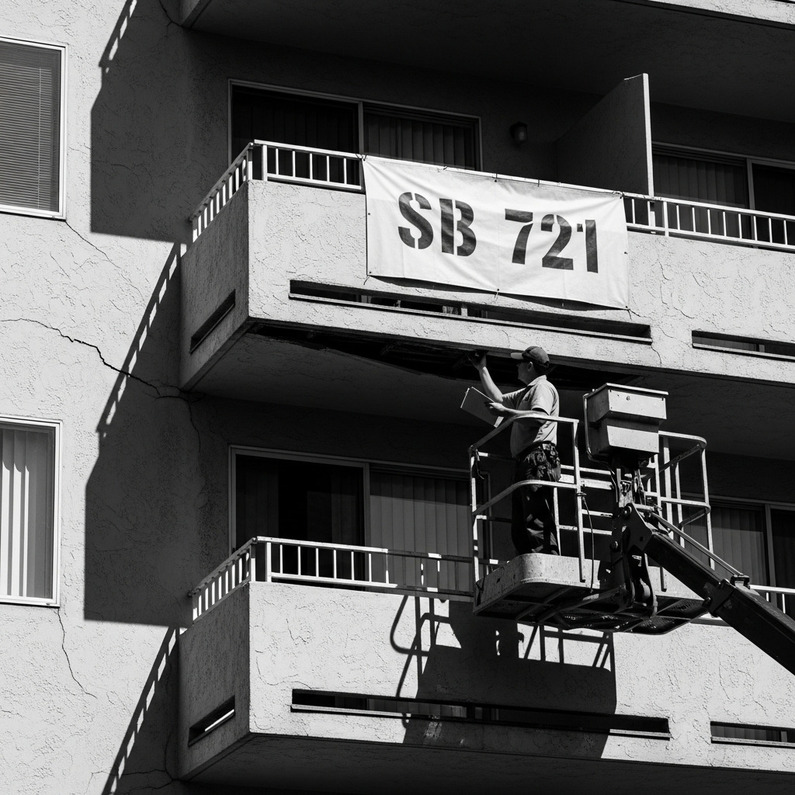
Who Is Qualified to Perform an SB 721 Inspection?
SB 721 allows a broader range of professionals to conduct inspections compared to SB 326. Under SB 721, the inspection can be performed by any of the following:
- Licensed general contractor (with relevant experience)
- Licensed architect
- Licensed structural engineer
- Licensed civil engineer
- Building inspector certified by a recognized professional organization
While the law gives you flexibility in who performs the inspection, the quality of the inspection matters enormously. An inspector who understands waterproofing assemblies, recognizes early-stage deterioration, and documents findings clearly will give you a far more useful report than one who checks boxes without understanding what they’re looking at. Make sure whoever you hire has direct experience with elevated deck assemblies in California’s climate.
FAQ: What Buildings Require SB 721 Inspection
Know What Buildings Require SB 721 Inspection — Then Get It Done Right
If you own or manage an apartment building with three or more units in California, SB 721 applies to you. The law is clear, the deadlines have passed, and the consequences of non-compliance go beyond fines. A deck or balcony that fails injures people, and a property owner who skipped a required inspection has very little legal ground to stand on when that happens.
West Coast Deck Inspections specializes in SB 721 and SB 326 compliance inspections for apartment buildings, HOAs, and multi-unit properties throughout California. Their licensed inspectors understand the structural and waterproofing details that matter most, and they produce clear, actionable reports that give property owners and managers exactly what they need to move forward with confidence.
Whether you’re scheduling your first SB 721 inspection, catching up after a missed deadline, or trying to understand what comes next after a deficiency report, West Coast Deck Inspections can help. Visit their SB 721 Balcony Inspections for Apartment Buildings page to learn more and request an inspection.