
Types of balcony inspections in California include SB 326 inspections for HOAs, SB 721 inspections for apartments, preventative safety evaluations, and structural damage assessments. Each type ensures Exterior Elevated Elements remain safe and legally compliant.
Choosing the correct inspection protects residents, reduces liability, and prevents costly structural failures.
Keep reading to understand which inspection applies to your property and how to stay fully compliant.
Why Balcony Inspections Are Now Mandatory in California
California balcony inspection laws were strengthened after tragic structural failures exposed the risks of water intrusion and hidden wood rot. Exterior Elevated Elements such as balconies, decks, walkways, and stairways are constantly exposed to weather conditions.
Over time, moisture penetrates waterproof membranes, damages framing, and weakens load-bearing components. When left unchecked, deterioration can lead to catastrophic collapse.
To prevent this, California enacted two primary laws governing balcony inspections:
- SB 326 for condominiums and HOAs
- SB 721 for apartment buildings
Understanding the different Types of balcony inspections begins with knowing which law applies to your property.
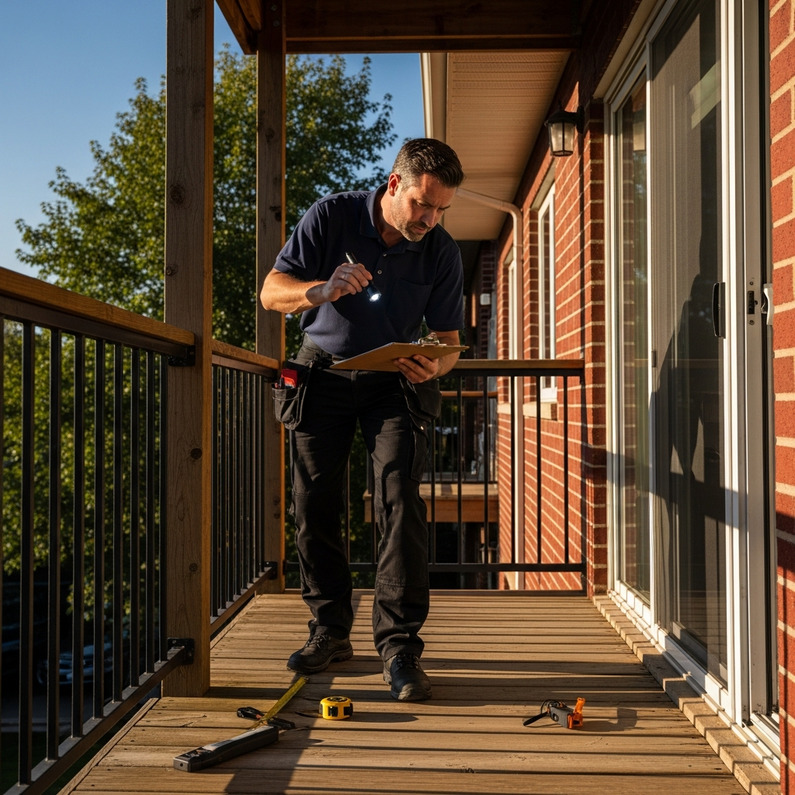
1. SB 326 Balcony Inspections (Condominiums & HOAs)
SB 326 applies to common interest developments with three or more multifamily dwelling units. This includes condominium associations and HOAs.
Under SB 326 requirements:
- Inspections must occur every 9 years
- A licensed structural engineer or architect must perform the evaluation
- At least 15 percent of balconies must be randomly inspected
- A formal report must be provided to the HOA board
These inspections focus on structural integrity, waterproofing systems, and load-bearing components.
For a detailed breakdown of requirements, review SB 326 condo balcony inspection law explained.
HOAs are responsible for budgeting inspections and repairs through reserve funding. Failure to comply can create liability exposure for board members.
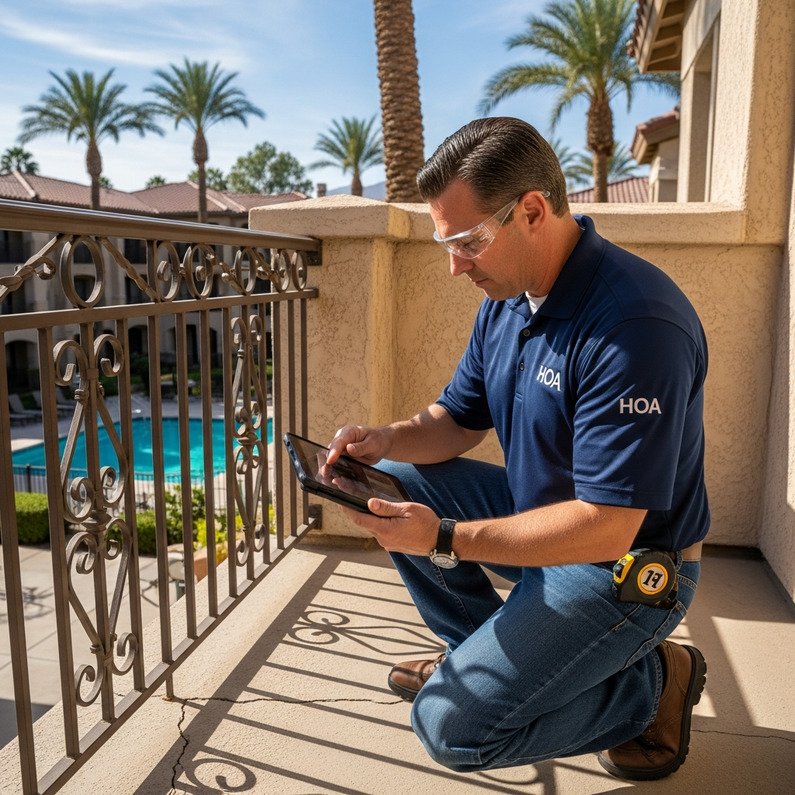
2. SB 721 Balcony Inspections (Apartment Buildings)
SB 721 applies to apartment buildings with three or more units that contain Exterior Elevated Elements supported substantially by wood framing.
Key requirements include:
- Inspection cycle every 6 years
- Evaluation by a licensed professional
- Mandatory repairs within a defined timeframe if structural issues are found
This law applies to landlords and property managers of rental properties.
To understand the legal framework, read SB 721 apartment balcony inspection bill overview.
For practical compliance guidance, see what California landlords and property managers must know about SB 721 balcony inspections.
Apartment owners must act quickly if deficiencies are identified, as delayed repairs can lead to enforcement actions.
3. Preventative Maintenance Balcony Inspections
Not all inspections are legally mandated. Preventative inspections are voluntary but strongly recommended.
These inspections identify:
- Early water intrusion
- Minor framing deterioration
- Failing sealants
- Rusting connectors
- Drainage issues
Preventative inspections are especially valuable in coastal and high-humidity areas where moisture damage progresses rapidly.
Small issues discovered early can save tens of thousands in structural repair costs.
4. Forensic or Damage-Specific Inspections
Forensic inspections are conducted when visible signs of damage appear, such as:
- Sagging balconies
- Cracked stucco
- Spongy decking
- Loose railings
These inspections may involve:
- Intrusive testing
- Moisture readings
- Opening sections of stucco
- Structural load assessment
Unlike routine compliance inspections, forensic evaluations determine the root cause of structural deterioration.
This inspection type is often required before major repair projects begin.
5. Post-Repair Verification Inspections
After repairs are completed, a verification inspection confirms:
- Repairs meet structural standards
- Waterproofing systems are properly installed
- The structure is safe for occupancy
Post-repair inspections protect property owners from future liability and provide documentation for insurance records.
They are commonly recommended after major structural remediation.
Comparison Table: SB 326 vs SB 721 Balcony Inspections
| Requirement | SB 326 | SB 721 |
| Property Type | Condominiums & HOAs | Apartment Buildings |
| Units Required | 3+ multifamily units | 3+ units |
| Inspection Frequency | Every 9 years | Every 6 years |
| Responsible Party | HOA Board | Property Owner / Landlord |
| Inspector Qualification | Licensed architect or structural engineer | Licensed professional |
What Areas Are Evaluated During Balcony Inspections
Balcony inspections focus on critical structural components:
- Ledger board connections
- Support beams and joists
- Guardrails and attachment points
- Waterproof membranes
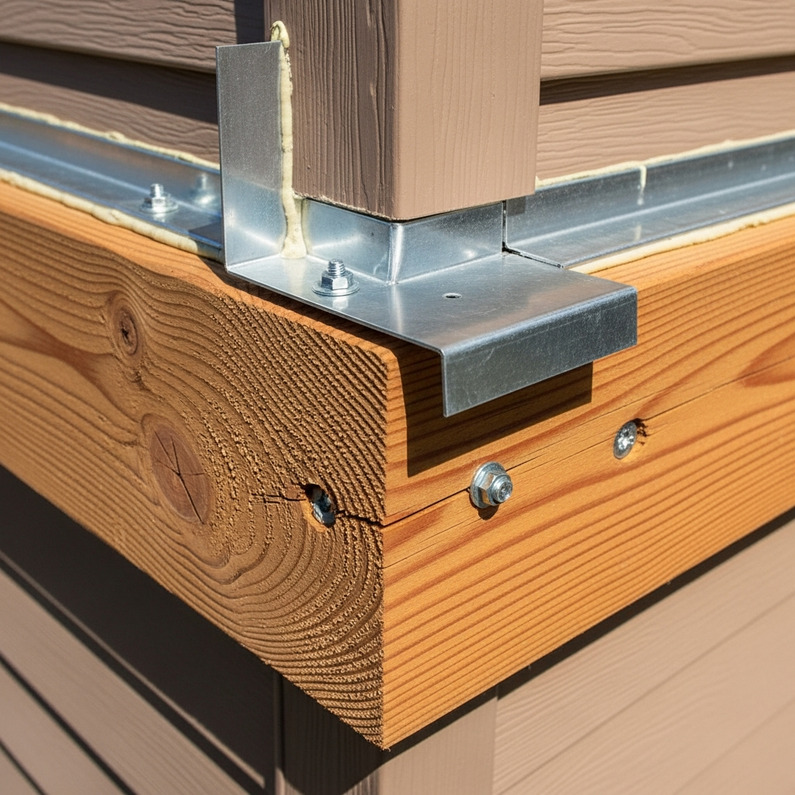
- Flashing systems
- Drainage slope and water diversion
Exterior Elevated Elements must extend more than six feet above ground and rely significantly on wood framing to fall under these regulations.
Common failure points include improperly flashed ledger boards and inadequate waterproof coatings.
Step-by-Step Balcony Inspection Process
Understanding the process helps property owners prepare effectively.
Step 1: Document Review
Inspectors evaluate:
- Original construction plans
- Maintenance history
- Prior inspection reports
Step 2: Visual Examination
Inspectors look for:
- Cracking surfaces
- Water staining
- Soft wood areas
- Rusting hardware
Step 3: Intrusive Testing
When necessary, small openings are made to examine concealed framing members.
Step 4: Formal Inspection Report
The final report outlines:
- Structural condition
- Safety assessment
- Repair recommendations
- Compliance confirmation
HOAs can find further compliance guidance in what California HOAs need to know about SB 326 balcony inspections.
Estimated Costs of Balcony Inspections
Inspection costs vary depending on property size, accessibility, and testing scope.
| Property Type | Typical Inspection Cost Range |
| Small HOA (3–10 units) | $2,000 – $5,000 |
| Mid-Size HOA (20–50 units) | $5,000 – $12,000 |
| Apartment Complex | $4,000 – $15,000 |
Repairs are separate and depend on structural damage severity.
Common Structural Issues Found During Inspections
Across California properties, inspectors frequently discover:
- Dry rot in load-bearing framing
- Corroded metal fasteners
- Failed waterproof membranes
- Improper balcony slope
- Water pooling near ledger connections
Buildings constructed before modern waterproofing standards are especially vulnerable.
Routine inspections significantly reduce long-term structural risk.
Choosing the Right Inspection Type for Your Property
To determine which inspection applies:
- Condominium or HOA → SB 326
- Apartment rental property → SB 721
- Visible damage → Forensic inspection
- Recently repaired structure → Post-repair verification
- No inspection history → Preventative evaluation
For deeper understanding of California inspection requirements, attend the California balcony and deck inspection SB 326 & SB 721 compliance webinar.
Selecting the correct inspection ensures your property remains safe, compliant, and protected from legal exposure.
Consequences of Ignoring Balcony Inspection Requirements
Failure to comply with balcony inspection laws can lead to:
- Civil penalties
- Increased insurance premiums
- Denied insurance claims
- HOA board liability
- Tenant injury lawsuits
Proactive compliance protects residents and property value.
How to Prepare for a Balcony Inspection
Preparation ensures efficiency and minimizes disruption.
✔ Notify residents ahead of time ✔ Provide clear balcony access ✔ Gather maintenance documentation ✔ Budget for potential repairs ✔ Address visible damage early
A well-prepared property speeds inspection and improves reporting accuracy.
Final Thoughts on Types of Balcony Inspections
Understanding the different Types of balcony inspections is essential for California property owners and HOA boards. Whether governed by SB 326 or SB 721, compliance is not optional.
Scheduling the correct inspection protects residents, reduces liability, and prevents structural failure.
By acting early and choosing the right inspection type, you safeguard both your property and your long-term investment.
Frequently Asked Questions
What are the main types of balcony inspections in California?
The main types of balcony inspections include SB 326 inspections for condominiums, SB 721 inspections for apartments, preventative maintenance inspections, forensic structural inspections, and post-repair verification inspections. Each serves a different purpose depending on property classification and condition.
How often are balcony inspections required under SB 326 and SB 721?
SB 326 requires inspections every 9 years for condominium associations, while SB 721 requires inspections every 6 years for apartment buildings. These timelines ensure Exterior Elevated Elements remain structurally sound and safe for occupants.
Who is qualified to perform a balcony inspection?
Licensed structural engineers, architects, or qualified building professionals approved under California law must perform balcony inspections. The qualifications depend on whether the property falls under SB 326 or SB 721 requirements.
What happens if a balcony fails inspection?
If deficiencies are identified, property owners or HOAs must complete required structural repairs within the legally mandated timeframe to restore safety and compliance. Failure to repair can result in penalties, legal liability, and insurance complications.